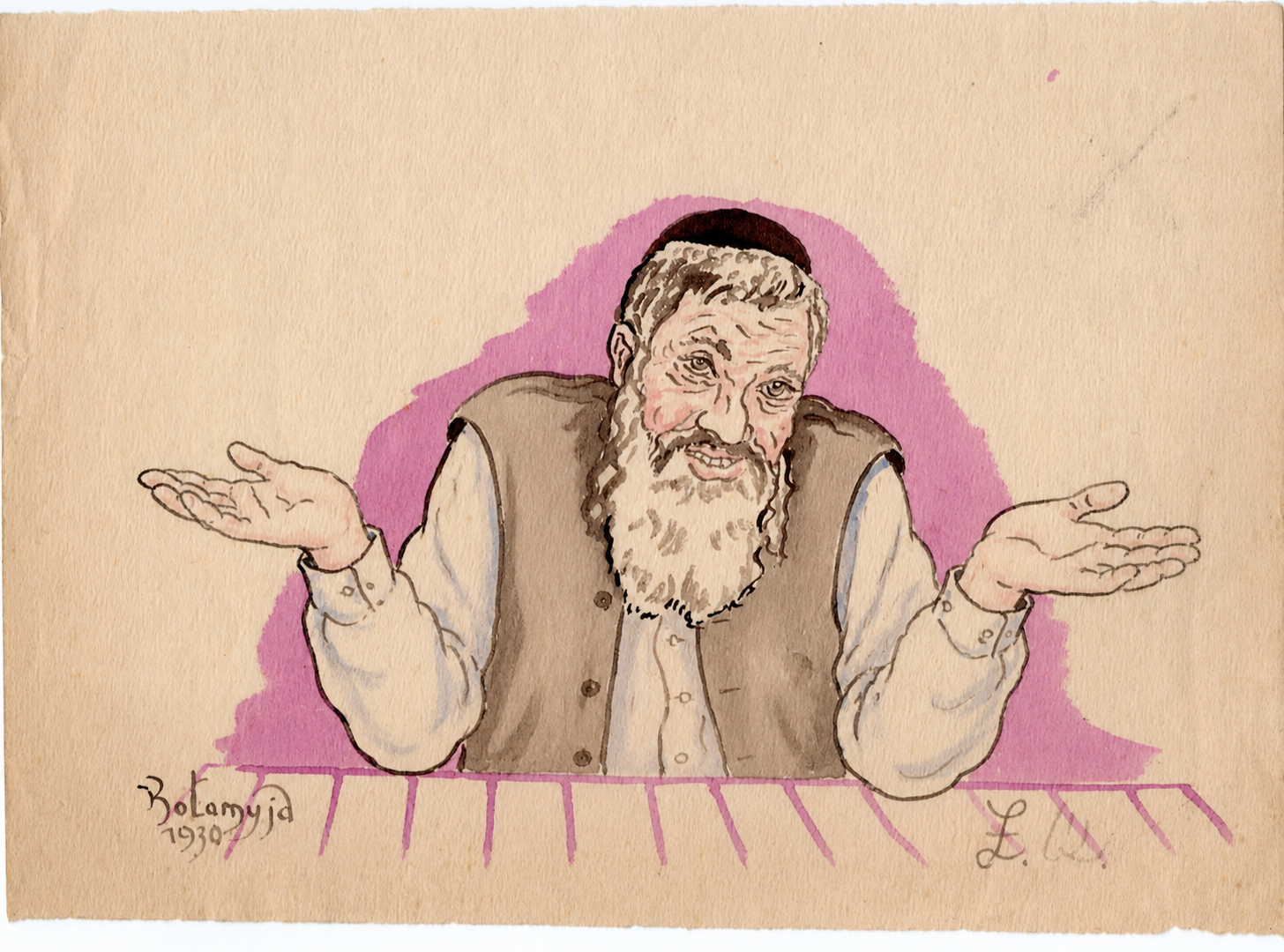

Pinkas Weissmann (working title)
A naive American collector searching for family roots splurges on antique watercolors of Jewish life in 1930s Galicia. But when their murdered artist returns as a pestering spirit demanding recognition, the collector follows him to wartime Ukraine – and begins to suspect he has been meticulously scammed.
Project Overview
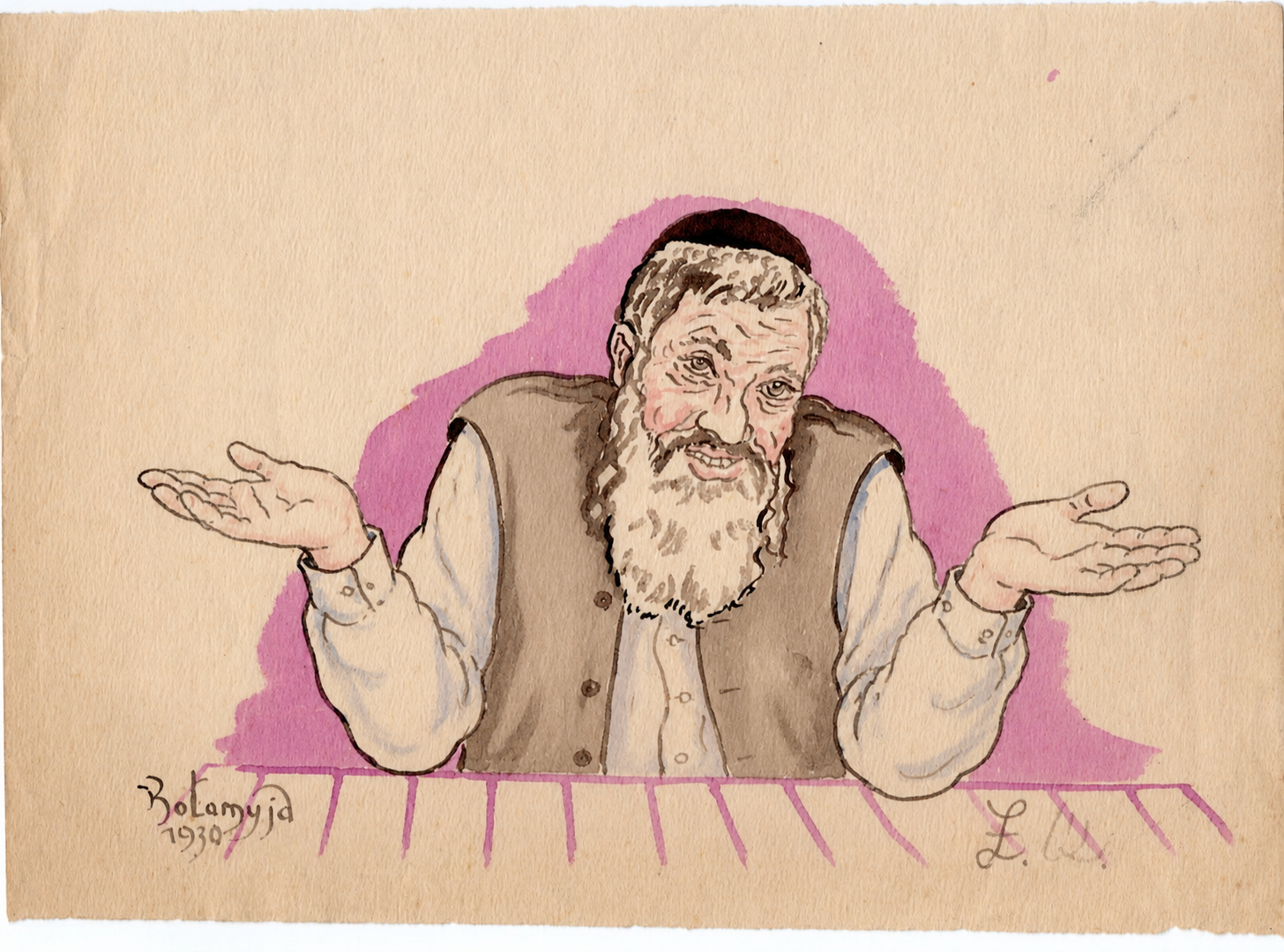
synopsis: An American collector buys a set of watercolors at auction depicting Jewish life in 1930s Ukrainian Galicia, believing them to be the work of Lazar Weissmann – a forgotten Jewish artist killed in the Holocaust. The paintings are marked Kolomyya, the city his ancestors left more than a century ago. Could these images offer a route back into the world they left behind?
Perhaps. But the paintings have no reliable provenance, and the story of Weissmann is thick with myth but suspiciously thin on hard evidence. With Kolomyya the only concrete lead, the Collector travels to Ukraine to discover who painted them – and what, exactly, he has bought.
In this fast-paced, first-person investigation, we follow the Collector across Ukrainian Galicia as he searches for traces of Weissmann. But the artist proves elusive. Cagey dealers offer up a collection ten times larger than the one he first bought and threaten to sell it to someone else if he does not act quickly. Experts and archivists draw blanks. Laboratory tests prove inconclusive. And as more Weissmann paintings surface, the Collector has to ask himself: has he really uncovered a lost fragment of Jewish history, or merely walked into an elaborate scam?
Unable to authenticate either the paintings or the man said to have created them, the Collector instead finds himself pestered by Weissmann: a haughty illustrated presence rendered in the style of the watercolors themselves. Weissmann urges him toward Kolomyya, demanding the Collector prove he existed and restore his lost legacy. And who knows – perhaps along the way, the Collector will discover something about his own family’s past.
In Kolomyya, the search unfolds through present-day encounters with members of the city’s small Jewish community, antique dealers, archivists, historians, and the characters who populate Weissmann’s illustrated world. But when local residents finally recognize the paintings, the name they offer is not Lazar Weissmann. It is Volodymyr Mykhalchuk, a local artist and tour guide who reportedly produced and sold thousands of similar works across Eastern Europe in the early 2000s. Faced with the possibility that Mykhalchuk appropriated his painted world, Weissmann promises hell when he “gets his hands on that mamzer – ”
But Mykhalchuk died in 2016. The Collector tracks down Mykhalchuk’s family and close circle, who describe an orphan of ambiguous – perhaps Jewish – origins, fascinated by Kolomyya’s vanished Jewish world and determined to resurrect and sell the past. And their testimony turns the investigation back on Weissmann himself. Because Mykhalchuk may not merely have copied Weissmann’s work – he may have invented the artist entirely.
Yet this explanation also has holes, because local witnesses insist Mykhalchuk owned a collection of Weissmann “originals.” So Weissmann proves harder to dismiss than to authenticate. And if the investigation can bring the Collector no closer to certainty, he must confront the possibility that the paintings say less about the distant past than about his own desire to belong to it.